

Last Updated: November 3, 2026
Quick Summary
A 4WD suspension upgrade replaces or adds to springs, shock absorbers and control arms to change on-road handling, off-road articulation and load support. Gains depend on matching the parts to how the vehicle is used. An upgrade does not increase the legal load capacity.
- Upgraded parts should be matched as a system, since changing one component alone can make handling worse.
- Stiffer springs can fix sag under load but may make the unladen ride unstable.
- A lift raises the centre of gravity and can increase rollover risk on steep side slopes.
- A suspension upgrade does not change gross vehicle mass; a GVM upgrade is a separate certified process.
- Most suspension changes require a wheel alignment afterwards, and fasteners should be rechecked after the first few weeks.
Table of Contents
- What a 4WD Suspension Upgrade Actually Changes
- Key Benefits of a 4WD Suspension Upgrade
- Signs Your 4WD Suspension Needs Replacing
- 4WD Suspension Upgrade for Towing and Heavy Loads
- Suspension Lift vs Suspension Upgrade: Which Do You Need?
- Trade-offs, Compliance and What a 4WD Suspension Upgrade Costs
- Book Your 4WD Suspension Assessment With Northside Autocare
- Frequently Asked Questions
Lifting a 4WD’s suspension changes how it handles on the road, how it climbs over rough ground, and how it carries a load, but the gains only hold if the upgrade suits how you use the vehicle. Owners who buy a suspension kit for looks, or because a forum said it was essential, can end up with a harsher ride and an expensive bill for work that does not solve their problem.
A 4WD suspension upgrade replaces or adds to the components that control how the wheels move relative to the body. Most kits involve some combination of springs, shock absorbers, and control arms. The aim is to improve wheel articulation, ground clearance, and load support, though each change comes with compromises.
What a 4WD Suspension Upgrade Actually Changes
Stock suspension is designed for a balance of comfort, cost, and everyday use. An upgrade shifts that balance. Stiffer or taller springs raise the vehicle and alter how it sits under load. Our steering and suspension service page explains what an upgrade involves. Revised shock absorbers change how quickly the suspension compresses and rebounds. Control arms and other geometry parts can affect wheel alignment and how the tyres meet the road.
The important point is that these changes are interdependent. Raising the vehicle without matching the shocks and geometry can leave it handling worse than before. We recommend treating the suspension as a system rather than buying individual parts in isolation.
Key Benefits of a 4WD Suspension Upgrade
Used well, a properly matched upgrade can deliver real improvements. The two areas that matter most for most owners are on-road behaviour and off-road capability, but the size of the gain depends far more on how the components are matched to your vehicle and load than on the headline height or stiffness of the kit.
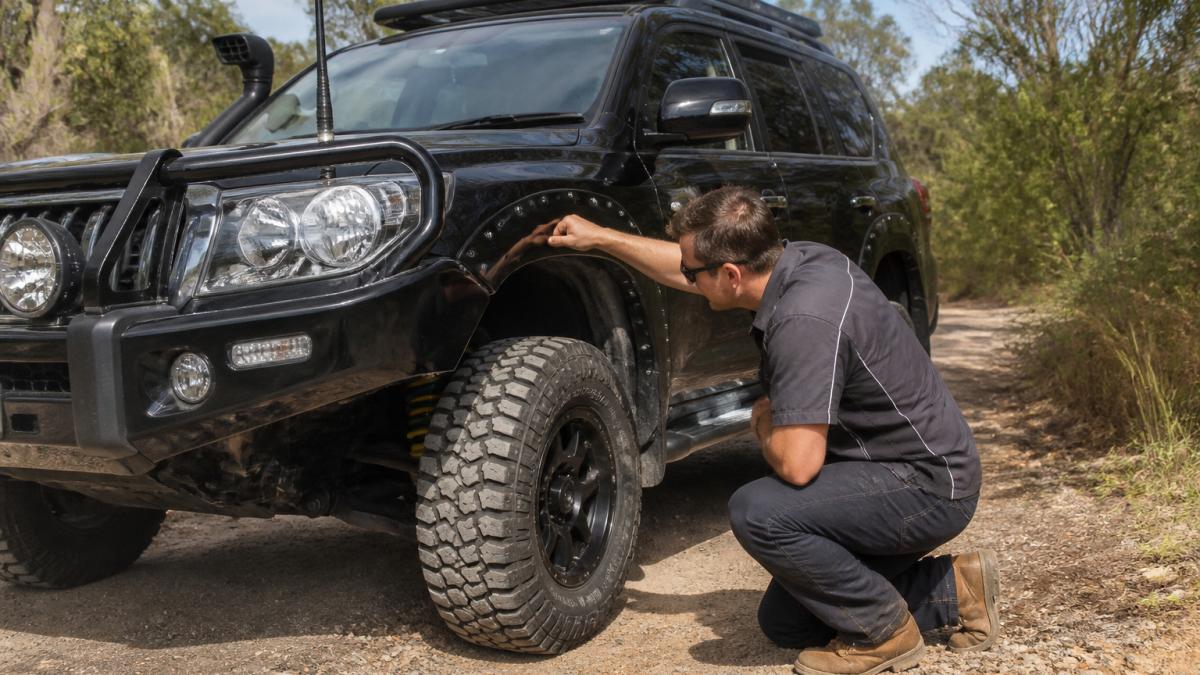
Better On-Road Handling and Stability
Worn or soft suspension lets the body roll in corners and wallow under braking. A well-chosen upgrade can reduce body roll and give steering a more direct feel, which is noticeable on country roads and when towing.
The mechanism matters here. Body roll is controlled mainly by spring rate and by the damper’s ability to resist compression and rebound.
That is why a heavy-duty kit fitted to a vehicle that mostly runs empty can feel jittery and skittish on sealed roads, while a comfort-oriented kit fitted to a fully loaded tourer can sag and wallow.
Watch out: fitting stiffer rear springs to fix sag without matching the dampers and, where relevant, the front spring rate can leave the vehicle pitching and unstable when unloaded, which is worse than the problem you set out to solve.
Greater Ground Clearance, Articulation and Traction Off-Road
Off-road, the gains come from more ground clearance, which lets the vehicle clear obstacles, and greater wheel articulation, which keeps tyres in contact with uneven ground. Better contact translates directly into traction, and fewer situations where a single wheel lifts and the vehicle loses grip.
Articulation is a function of suspension travel and how the springs and dampers allow each wheel to move independently.
Extra height also raises the centre of gravity and can increase rollover risk on steep side slopes, and it changes driveline and steering geometry. That is why a lift should be treated as one part of a system, not a standalone goal.
The table below sums up the main gains and their limits, as covered in this section.
| Area | Gain | Limit |
|---|---|---|
| On-road handling | Less body roll and steadier steering | Depends on matching spring rate and dampers |
| Off-road traction | More clearance and wheel articulation | A lift alone may not add travel |
| Stiffer springs | Can fix sag under load | Can make the unladen ride unstable |
| Height change | Raises clearance | Raises centre of gravity and rollover risk |
Signs Your 4WD Suspension Needs Replacing
Before considering an upgrade, check whether your existing suspension is simply worn out. Common warning signs include:
- The vehicle sits lower on one side or at one corner
- Excessive bouncing after hitting a bump or dip
- Oil leaking from shock absorbers
- Clunking or knocking over rough ground
- Uneven or accelerated tyre wear
- Pulling or wandering when driving straight
A worn component can often be replaced like-for-like at lower cost than a full upgrade. Our guide to suspension warning signs covers how to spot them early. Northside Autocare can assess your vehicle and advise whether a replacement or an upgrade makes more sense. You can also read more about recognising these symptoms early in our blog on suspension warning signs. If you are ready to have your setup checked, you can book a 4WD suspension assessment with us.
4WD Suspension Upgrade for Towing and Heavy Loads
Towing and carrying heavy loads place far more demand on the suspension than normal driving. Upgraded springs and shocks can improve load support and reduce sag at the rear, which helps keep the headlights aimed correctly and the steering stable.
However, a suspension upgrade does not increase the vehicle’s legal load capacity. The gross vehicle mass (GVM) and the axle and towing limits are set by the manufacturer and ratings plate, and the suspension cannot override them. If you need to carry more, you may need a separate GVM upgrade, which is a different job with its own compliance requirements. Caravan and trailer owners should also review their setup against the towing limits of the tow vehicle. For work on trailers and caravans, you can explore our trailer and caravan repair services.
Suspension Lift vs Suspension Upgrade: Which Do You Need?
These terms are often used interchangeably, but they mean different things. A suspension lift focuses on raising the vehicle to increase clearance, typically with taller springs or spacers. A suspension upgrade is broader and aims to improve performance, ride quality, and load handling, often across the whole system.
If your main goal is to fit larger tyres or clear obstacles, a lift may be enough. If you drive mostly on-road with occasional touring, or you want better handling and load support without a significant height change, a full upgrade is usually the better choice. Matching the choice to your actual use is more important than the size of the lift.
Trade-offs, Compliance and What a 4WD Suspension Upgrade Costs
Every upgrade involves trade-offs, and the most useful thing an owner can do is match the setup to how the vehicle is actually used. A touring vehicle that carries a constant load, a tow vehicle, a weekend off-roader and a daily driver all call for different spring rates and damper valving. Buying a kit before deciding which of those describes you is the most common way to end up disappointed.
Choosing a Setup for Your Use and Load
- Touring and heavy constant loads: Firmer springs and dampers valved for the loaded weight help control sag and body movement, but the vehicle will feel stiffer when empty.
- Towing: Rear spring rate and damper control matter most, because the tow ball load sits behind the rear axle. A setup that controls the load without over-stiffening the unladen ride is the goal.
- Frequent off-roading: Prioritise travel and articulation over height, and check that the kit maintains sensible driveline and steering geometry.
- Everyday driving with occasional load: A mild upgrade or a quality like-for-like replacement is often better value than a heavy-duty kit you rarely use to its capacity.
Suspension Upgrade Versus GVM Upgrade
A suspension upgrade changes springs, dampers and related components to improve how the vehicle carries load and behaves on and off road. It does not increase the vehicle’s legal load capacity. The gross vehicle mass (GVM) and the axle and towing limits are set by the manufacturer and the ratings plate, and suspension changes cannot override them.
A GVM upgrade is a separate, certified process that raises the vehicle’s legally permissible gross mass, and it typically involves an engineering assessment and compliance work beyond the suspension itself. If you need to carry more than the plate allows, a suspension upgrade alone will not get you there. Caravan and trailer owners should also review their setup against the towing limits of the tow vehicle.
Compliance, Insurance and Component Compatibility
- Compliance: Modifications to suspension and vehicle height must comply with Australian Design Rules and state vehicle inspection requirements. Non-compliant work can affect registration and insurance, so check requirements before buying parts. Modified vehicles may also need a roadworthy certificate after significant changes.
- Insurance and warranty: Implications vary by insurer and manufacturer, so confirm how a modification will affect your cover and warranty before committing.
- Component compatibility: Springs, shock absorbers, leaf packs, control arms and bushes need to work together and suit the specific vehicle. A kit designed for one model or load range may not suit another, and mixing unmatched parts is a common source of poor handling.
- Wear on other components: Raising the vehicle changes driveline angles and can increase stress on CV joints, driveshafts and steering components if the setup is not correctly matched.
- Alignment and post-install checks: Most suspension changes require a wheel alignment afterwards, and the alignment and fastener torques should be checked again after the first few weeks of use.
What It Costs
Pricing depends on the kit, the vehicle and the amount of installation work. Visit the Northside Autocare website or contact us for a quote based on your specific vehicle.
Book Your 4WD Suspension Assessment With Northside Autocare
Choosing the right upgrade starts with an accurate picture of your vehicle’s current condition and how you plan to use it. At Northside Autocare, we assess the existing setup, discuss your driving needs, and explain the realistic benefits and trade-offs of each option, so you can make an informed decision rather than a guess. Get started today and book your 4WD suspension assessment to keep your vehicle performing at its best.
Frequently Asked Questions
What are the benefits of upgrading a 4WD suspension?
A 4WD suspension upgrade typically improves ride comfort, on-road stability, ground clearance, wheel articulation and traction, and it can reduce the bottoming out that damages shocks and mounts on rough tracks. The gains depend on the components chosen and how the vehicle is used. Carrying a load or towing needs a setup matched to that weight, so a suspension that suits weekend trail driving may not suit daily towing. Northside Autocare can assess your vehicle and recommend a setup that fits how you drive.
How do I know if my 4WD needs a suspension upgrade?
Common signs include sagging at the rear when loaded, excessive body roll in corners, bottoming out on bumps, worn shock absorbers that leak fluid, and a vehicle that feels unsettled at highway speeds. Uneven tyre wear can also point to suspension problems that affect wheel alignment. A mechanic can inspect the springs, shocks and mounts to confirm whether an upgrade or a repair is the right fix. Book an inspection with Northside Autocare to check your vehicle properly.
Does a suspension upgrade improve ride comfort?
It can. Quality shock absorbers and correctly rated springs help control movement over bumps and reduce the jolting that comes from a worn or mismatched setup. Comfort improvements are not guaranteed, however. Stiffer off-road components can feel harsher on sealed roads, so the right choice depends on whether you drive mostly on bitumen, mostly off-road, or a mix of both. Ask Northside Autocare about a setup suited to your typical driving.
What is the difference between a suspension lift and a suspension upgrade?
A suspension lift raises the vehicle body to increase ground clearance and allow larger tyres, usually by changing springs or adding spacers. A suspension upgrade improves how the suspension performs, with better shock absorbers, springs and control arms that handle load, damping and wheel travel more effectively. Many vehicles benefit from both, but a lift alone can affect handling and geometry if it is not balanced with proper damping. Northside Autocare can explain which approach suits your use.


