
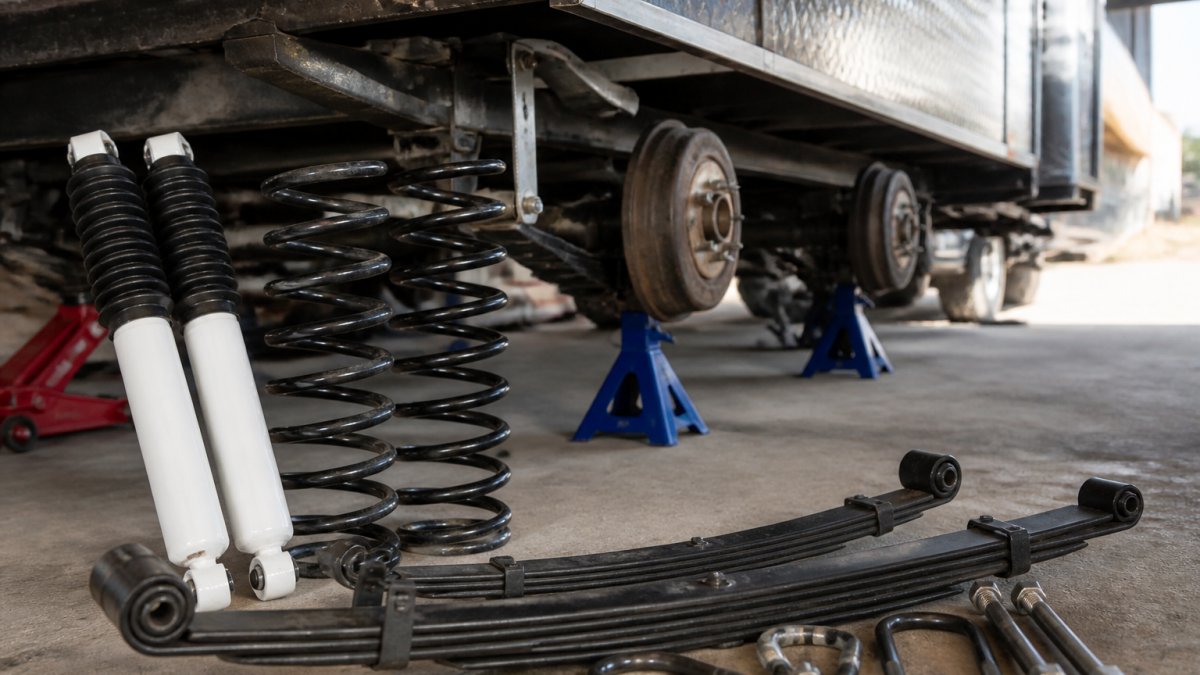
Last Updated: October 24, 2026
Quick Summary
Caravan suspension upgrades for offroad travel improve safety, durability, and capability on rough terrain by replacing worn or poorly matched suspension systems. Choose between beam axle systems for load capacity, independent suspension for articulation and comfort, and spring types like leaf springs, coil springs, or airbag systems depending on your terrain and loading patterns.
- Shock absorbers require replacement every 50,000 to 100,000 kilometres on coil spring and twin-shock systems.
- Inspect suspension components every 10,000 kilometres or before extended off-road trips for damage, cracks, and fluid leaks.
- Engineering approval and compatibility confirmation are essential before upgrading to ensure safe handling and maintain manufacturer warranty.
- Airbag suspension costs the most but offers automatic load-levelling and the smoothest ride on rough terrain.
- A 50 millimetre ride height increase combined with independent suspension improves ground clearance on rocky terrain and deep ruts.
Table of Contents
- Why Caravan Suspension Upgrades Matter for Off-Road Travel
- Independent Suspension vs Beam Axle Caravan Systems
- Suspension Types: Leaf Springs, Coil Springs, and Airbag Systems
- Caravan Suspension Upgrade Cost: What to Budget
- Maintaining Caravan Suspension Systems: Inspection and Service Life
- Compatibility, Engineering Approval, and Warranty Considerations
- Choosing the Right Upgrade for Your Off-Road Needs
- Frequently Asked Questions
Why Caravan Suspension Upgrades Matter for Off-Road Travel
Caravan suspension upgrades for offroad travel aren’t just about comfort, they’re about safety, durability, and capability when you’re far from help. A poorly matched or worn suspension can cause dangerous sway, uneven tyre wear, and loss of control on uneven ground.
This guide covers the practical decisions you’ll face when choosing a caravan suspension upgrade: which systems work best for your terrain, what compatibility issues matter, how much to budget, and what maintenance keeps these systems reliable long-term.
Independent Suspension vs Beam Axle Caravan Systems
The choice between independent suspension and beam axle systems determines how your caravan handles everything from highway driving to rough terrain, with trade-offs in load capacity, articulation, comfort, and maintenance.
Beam Axle: Simplicity and Load Capacity
Beam axle suspension uses a solid axle beam connecting both wheels, with springs mounted above or below. It’s straightforward, strong, and proven across decades of caravan towing, excelling at heavy loads because the solid structure distributes weight evenly across the axle assembly.
The trade-off is articulation. When one wheel hits a bump, the solid axle forces the opposite wheel to react the same way, meaning less independent movement and a choppier ride on rocks, ruts, or corrugated surfaces. Beam axles also transmit more shock back to the towing vehicle, which is fatiguing on long off-road journeys.
Pros of beam axle systems:
- Higher load capacity and stable weight distribution
- Simpler design with fewer moving components
- Proven durability for heavy-duty towing
- Lower initial retrofit cost in many cases
Cons of beam axle systems:
- Limited articulation on rough terrain
- Harsher ride quality, especially on corrugated roads
- More shock transmitted to towing vehicle
- Less ground clearance improvement options
Independent Suspension: Articulation and Comfort
Independent suspension allows each wheel to move vertically without directly affecting the other, so when the left wheel hits a pothole, the right stays relatively stable. On rough terrain, each wheel follows the ground contours independently, keeping the caravan more level and stable for a smoother ride, better ground contact, and improved handling.
Independent suspension also opens possibilities for ground clearance improvements, since each wheel can move through a greater range of travel, letting you increase ride height without sacrificing suspension travel. The downside is complexity: more moving parts mean more wear points, more maintenance, and higher retrofit costs, plus careful tuning to handle maximum load without bottoming out.
Pros of independent suspension systems:
- Superior articulation on rough and uneven terrain
- Smoother ride quality and reduced shock transmission
- Better ground clearance potential
- Improved handling stability on demanding terrain
Cons of independent suspension systems:
- Higher retrofit and maintenance costs
- More complex design with additional wear points
- Requires careful setup for maximum load handling
- Tuning needed to prevent bottoming out under load
Suspension Types: Leaf Springs, Coil Springs, and Airbag Systems
The spring type you choose determines how your caravan absorbs bumps, carries load, and maintains ride height across different terrain and loading conditions.
Leaf Spring Suspension
Leaf springs are the traditional choice: multiple curved steel leaves stacked together flex to absorb bumps while supporting load. They’re durable, require minimal maintenance, and handle heavy loads reliably, though ride quality degrades. For caravans with heavy, consistent loading, leaf springs provide predictable performance without complex adjustment.
The limitation is fixed height: as leaf springs age and compress, ride height drops, and reduced ground clearance becomes a problem on rough terrain. They also ride stiffer because the entire stack flexes as one unit, which feels harsh on corrugated roads.
Pros of leaf spring suspension:
- Durable and reliable for heavy loads
- Minimal maintenance requirements
- Forgiving if slightly overloaded
- Cost-effective for retrofit
Cons of leaf spring suspension:
- Fixed ride height that compresses over time
- Stiffer ride quality on corrugated terrain
- Limited ground clearance improvement
- Reduced articulation compared to modern alternatives
Coil Springs and Twin-Shock Configurations
Coil springs compress vertically, allowing independent wheel movement when paired with trailing-arm or multi-link designs. Twin-shock configurations use two shock absorbers per wheel to control spring movement and damping, providing excellent articulation and a more compliant ride.
For off-road travel, coil springs maintain more consistent ride height across varying loads, and independent shock absorbers prevent one wheel’s bump from affecting the opposite side, translating to better traction and more predictable handling. The trade-off is more maintenance: shock absorbers need replacement every 50,000 to 100,000 kilometres.
Pros of coil spring and twin-shock systems:
- Better articulation and independent wheel movement
- More consistent ride height across load ranges
- Improved comfort on rough terrain
- Better tuning options for specific conditions
Cons of coil spring and twin-shock systems:
- Higher retrofit and ongoing maintenance costs
- Shock absorbers require regular replacement
- More complex setup and tuning required
- Higher initial investment
Airbag Suspension for Load Control
Airbag suspension uses compressed air chambers instead of mechanical springs, with pressure adjusting automatically or manually to maintain ride height regardless of load, providing unmatched flexibility for variable loading.
Airbag systems also offer the smoothest ride because air naturally absorbs vibration, significantly reducing the harsh feedback mechanical springs transmit on corrugated roads. The limitations are cost and complexity: airbag retrofit is the most expensive option, and compressors, electronic controls, and air lines add failure points. If an airbag ruptures, you lose suspension support and need immediate repair, so check pressure regularly and inspect for leaks.
Pros of airbag suspension systems:
- Automatic load-levelling across all conditions
- Smoothest ride quality on rough terrain
- Maintains optimal ground clearance when loaded
- Best for variable loading scenarios
Cons of airbag suspension systems:
- Highest retrofit and replacement costs
- Complex system with electronic controls
- Air leaks can cause sudden loss of support
- Requires regular pressure monitoring and maintenance
Caravan Suspension Upgrade Cost: What to Budget
Suspension upgrade costs depend on system type, your caravan’s current suspension condition, compatibility requirements, and whether you’re retrofitting components or replacing the entire assembly.
Professional installation is essential for all upgrades, since improper setup can affect handling, tyre wear, and safety. Factor in alignment checks and testing to ensure the caravan tracks straight and level when towed.
To get an accurate quote for your specific caravan and upgrade preference, contact Northside Autocare for a suspension assessment. We’ll evaluate your current suspension condition, discuss your off-road travel plans, and provide detailed pricing for the upgrade option that best suits your needs and budget.
| Suspension Type | Typical Upgrade Scope | Maintenance Frequency | Best For |
|---|---|---|---|
| Leaf Spring | Spring replacement, bushings | Annual inspection | Heavy, consistent loads |
| Coil Spring | Full suspension assembly, shocks | Every 50-100k km | Balanced comfort and terrain |
| Twin-Shock | Dual dampers, coil springs, arms | Every 50-100k km | Rough terrain, articulation |
| Airbag | Air springs, compressor, controls | Pressure checks, annual service | Variable loads, smooth ride |
Maintaining Caravan Suspension Systems: Inspection and Service Life
Suspension maintenance determines how long your upgrade performs safely and predictably on rough terrain. Regular inspection catches wear before it becomes dangerous.
Inspect suspension components every 10,000 kilometres or before extended off-road trips. Look for damage to springs, cracks in welds, fluid leaks from shock absorbers, and play in suspension joints. Replace bushings when they become soft or split. Test shocks by pressing down on a caravan corner and releasing; if it bounces multiple times, they’re worn and need replacement.
Leaf springs develop fatigue cracks over time, especially where leaves are clamped together, and a cracked leaf spring can fail suddenly, causing loss of suspension support. Coil springs rarely fail but can lose their rate if overheated. Shock absorber fluid leaks indicate internal seal failure, and continuing to use a leaking shock means losing damping.
Service intervals depend on suspension type and use intensity.
Professional suspension service is important because proper setup affects how safely your caravan behaves when towed. Book a caravan suspension inspection with Northside Autocare to assess your current system’s condition and determine what maintenance or replacement is needed before your next off-road adventure.
Compatibility, Engineering Approval, and Warranty Considerations
Suspension upgrades must be compatible with your caravan’s chassis, towing vehicle, and braking system. Incompatible upgrades can affect handling, braking performance, and legal roadworthiness, so engineering approval and warranty implications are critical.
Upgrading suspension changes how the caravan sits, distributes weight, and responds to terrain, affecting the towing vehicle’s brake load calculations, steering response, and stability control.
Engineering approval ensures the upgrade has been tested and certified as safe for the caravan type and towing vehicle class, and many upgrades require engineer certification or manufacturer approval. Before purchasing, confirm compatibility with your specific caravan model and that engineering approval is included or available.
Warranty implications matter because manufacturer warranties often exclude damage caused by non-approved modifications. If you upgrade without engineering approval and later experience a failure, even an unrelated one, the manufacturer might deny the claim.
When evaluating a suspension upgrade, ask the supplier for engineering documentation, compatibility confirmation for your caravan model, and clarity on how the upgrade affects manufacturer warranty. Contact Northside Autocare to discuss compatibility and approval requirements for your specific caravan and upgrade choice.
Choosing the Right Upgrade for Your Off-Road Needs
The right suspension upgrade matches your actual travel conditions, load patterns, and performance priorities. Choosing on price alone often leads to compromises that become obvious once you’re on rough terrain.
Start by honestly assessing your travel patterns. If you mostly camp on established sites with maintained roads, a simple leaf spring upgrade might suffice.
Consider your towing vehicle’s capability too. A lighter vehicle with modest suspension can’t safely handle the stability demands of a heavily upgraded caravan suspension.
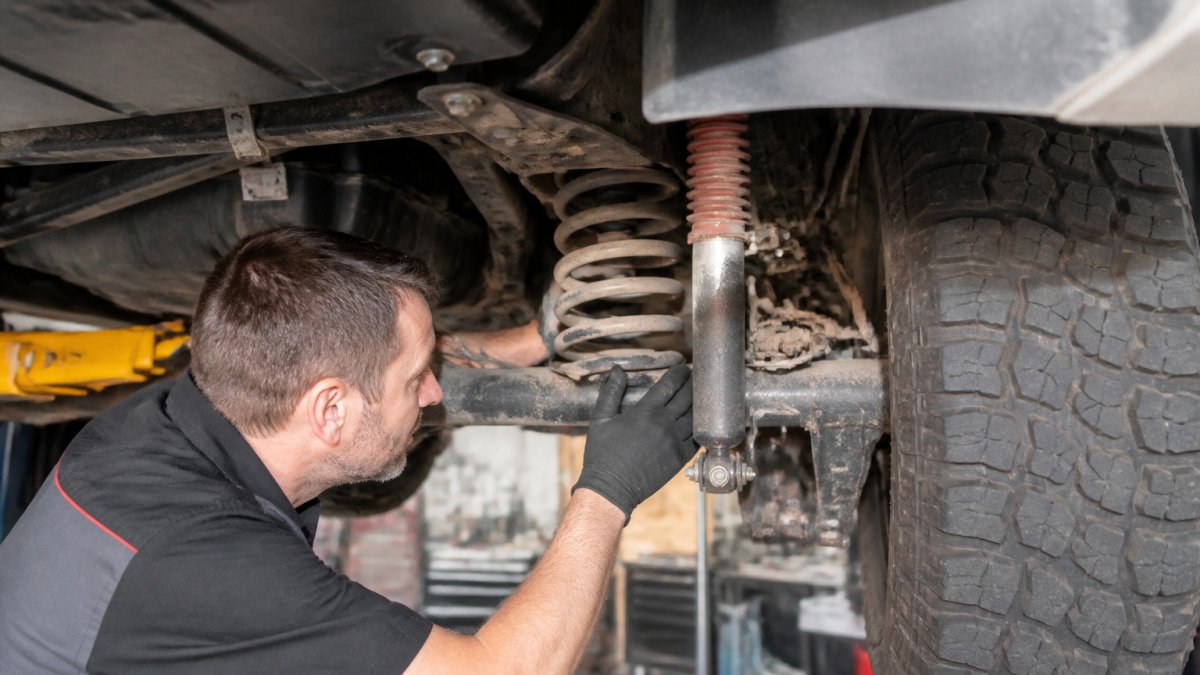
Ground clearance matters too. On rocky terrain or deep ruts, a 50 millimetre ride height increase combined with improved articulation from independent suspension can be the difference between clearing an obstacle and high-centring on it.
Budget realistically for the complete upgrade, not just component cost. Installation, alignment, testing, and chassis modifications add significantly to the final price.
Most importantly, match the upgrade to the caravan’s intended use. A touring caravan that occasionally ventures onto rough roads needs different suspension than a purpose-built off-road camper traversing demanding terrain.
Choosing the right caravan suspension upgrade requires balancing terrain demands, load patterns, budget, and compatibility with your towing vehicle.
Frequently Asked Questions
What is the difference between independent and beam axle suspension for off-road caravans?
Beam axle suspension connects both wheels to a rigid axle, offering high load capacity and durability on corrugated roads. Independent suspension allows each wheel to move separately, improving articulation and ride comfort on uneven terrain. Independent systems provide better ground clearance and wheel travel.
How much does a professional caravan suspension upgrade cost?
Caravan suspension upgrade costs vary depending on the system type, existing chassis configuration, and labour complexity. Pricing depends on whether you’re retrofitting leaf springs, installing coil springs with twin shocks, or upgrading to airbag suspension. Contact Northside Autocare for a detailed quote based on your specific caravan model and upgrade requirements.
Does upgrading caravan suspension void the manufacturer’s warranty?
Suspension upgrades can affect warranty coverage if they’re not engineering-approved or installed incorrectly. To maintain warranty compliance, ensure any upgrade is performed by qualified specialists who understand manufacturer requirements and obtain proper engineering certification where required. Northside Autocare provides manufacturer-approved logbook servicing and can advise on warranty-safe upgrade options for your caravan.
How often should I have my caravan suspension inspected after an upgrade?
After a suspension upgrade, inspect your caravan’s suspension system every 10,000 kilometres or before extended off-road travel. Check shock absorbers for leaks, springs for cracks, and all fasteners for tightness. Regular maintenance extends service life and prevents costly failures on demanding terrain. Professional inspection ensures your upgraded suspension performs safely and reliably.

