
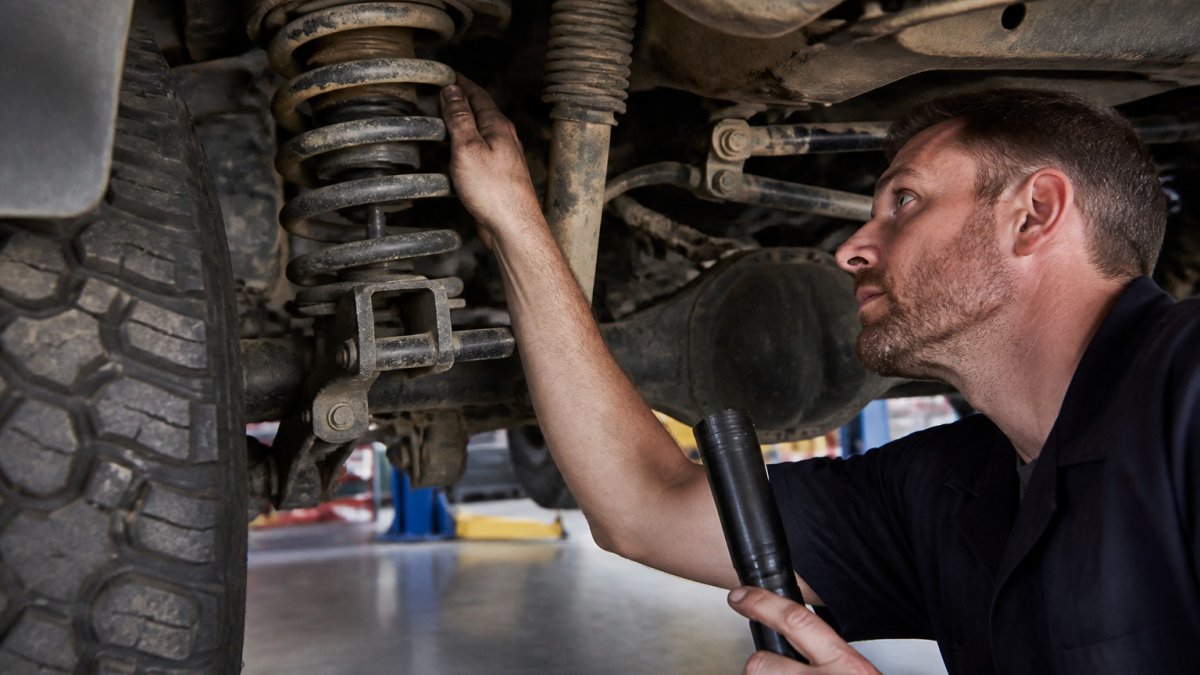
Quick Summary
A 4WD suspension checkup is worth booking before your next trip if you notice excessive bouncing, nose dive, harshness, clunks, leaking shocks or cracked bushes. Catching these early lets you fix issues on your schedule rather than on a remote track.
- Check whether the body settles within one or two rebounds after a bump.
- Look for oily residue or a wet film on shock absorber bodies and shafts.
- Note what you felt, the speed, road surface, and whether the vehicle was loaded.
- Prioritise safety items like worn ball joints, failing shocks and steering damage before a trip.
- Have suspension assessed at each logbook service and before long or remote trips.
Table of Contents
- Why a 4WD Suspension Checkup Matters Before Your Next Trip
- Signs of Worn 4WD Suspension You Can Spot Yourself
- What Happens During a Professional 4WD Suspension Inspection
- A Step-by-Step Pre-Trip 4WD Inspection Checklist
- How Often to Service Your 4WD Suspension and Why Intervals Vary
- Inspection Costs, Repair Priorities and What to Expect
- Booking Your 4WD Suspension Checkup With Northside Autocare
- Frequently Asked Questions
Why a 4WD Suspension Checkup Matters Before Your Next Trip
Last Updated: October 29, 2026
A 4WD suspension checkup is one of the most useful bits of preventative maintenance you can book before a trip. Your suspension carries the weight of the vehicle, keeps the tyres in contact with rough ground, and absorbs the knocks that come from corrugations, rocks and creek crossings. When it is worn, the whole vehicle works harder, and you feel it long before anything fails outright.
Many owners only think about suspension once something sounds or feels wrong. Waiting can turn a simple bush replacement or shock service into a far bigger job. Booking a checkup before a long trip gives you time to fix issues on your schedule rather than halfway up a track.
Signs of Worn 4WD Suspension You Can Spot Yourself
Many owners can pick up early warning signs without tools. Being able to recognise them helps you decide when to book a checkup, rather than waiting for a service reminder. The aim here is not to diagnose, it is to gather enough specific evidence that a technician can go straight to the likely cause.
Handling and ride warning signs
Pay attention to how the vehicle behaves on the road, because suspension faults usually show up as a change from what you normally feel.
- Excessive bouncing after a bump. If the body keeps moving after the wheels have passed the bump, the shock absorbers are not controlling spring movement. A common rule of thumb is that the body should settle within one or two rebounds; more than that warrants a check.
- Nose dive under braking or squat under acceleration. Worn front shocks or sagging front springs let weight transfer more than usual. If the nose dips sharply and recovers slowly, note it.
- Body roll in corners or a vague, wandering feel at highway speed. This can point to worn shocks, tired springs, worn sway bar bushes or play in steering components. It is also a common early sign that a lifted vehicle’s geometry is out of spec.
- Harshness over small bumps. A 4WD that suddenly feels crashy over expansion joints or gravel often has shocks that have lost their damping, or bump stops that are being contacted because the springs have sagged.
- A clunk or knock over speed humps or when turning. This is often a bush, mount, ball joint or sway bar link rather than the shock itself, which is why a visual check and a professional inspection work together.
Changes in ride quality are often the first clue. If your 4WD feels harsher or more floaty than it used to, note it and get it checked before your next trip.
Leaking shocks and visible wear
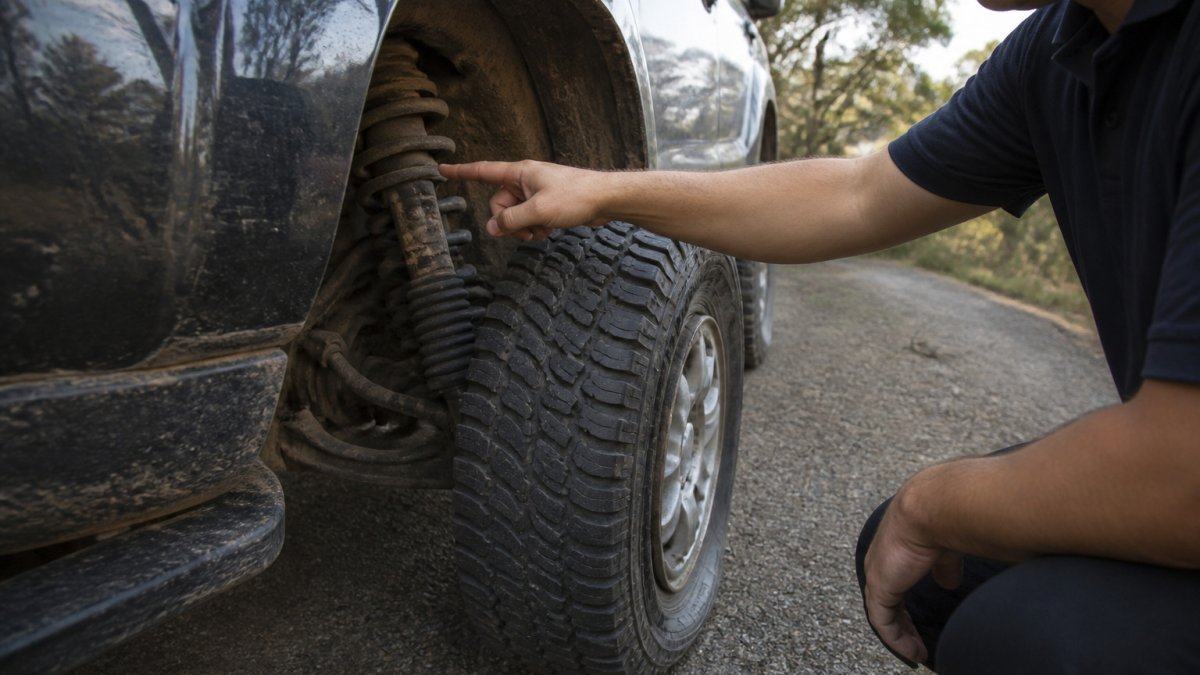
Take a quick look around each wheel when the vehicle is parked on level ground. Oily residue on the shock body, or a damp, greasy film down the shaft, usually means the seals are failing. A light film can be normal seepage; a wet, dripping shock is not.
Check for cracked or perished rubber bushes, sagging coil springs, torn boots around the joints, and loose or missing mounting bolts. On leaf-sprung rear ends, look for cracked leaves, worn shackle bushes and flattened or inverted leaves. On lifted vehicles, pay particular attention to the extra components a lift introduces, extended brake lines, sway bar links, panhard rod and caster correction, because these are common sources of noise and wear.
Only inspect what you can see safely. Never get under a vehicle supported only by a jack, and leave anything beyond a visual check to a qualified technician.
A visual check is not a diagnosis. A shock can look dry and still have lost its damping, and a bush can look intact while being soft enough to cause play under load. Use what you see to describe the symptom accurately when you book.
What to note before you book
Write down what you felt and when: the speed, the road surface, whether the vehicle was loaded or towing, and whether the symptom appeared after a trip or a modification. That information is more useful to a technician than a general complaint, and it helps them prioritise the inspection.
What Happens During a Professional 4WD Suspension Inspection
A professional inspection goes further than a visual check.
A Step-by-Step Pre-Trip 4WD Inspection Checklist
Use this checklist a few weeks before a trip, not the night before. The point is to leave enough time to book a professional checkup and have any safety-critical work done without rushing. Work through it in order, on level ground, with the vehicle unladen unless you normally travel loaded.
Step 1, Park and prepare
Park on level ground, chock the wheels, and let the vehicle settle. Have a torch and a rag handy. Do not get under a vehicle supported only by a jack; if you need to look underneath, use ramps or stands rated for the vehicle’s weight.
Step 2, Walk around each corner
At each wheel, check the shock absorber body and shaft for oily residue or a wet film. Look at the coil spring or leaf pack for cracks, sag or displaced seats. Check the rubber bushes at the ends of the sway bar links, the control arms and the panhard rod for cracking, perishing or movement. Look at the boot on each ball joint and CV joint for splits or grease loss.
Step 3, Bounce test
Push down firmly on each corner and release. Note how many times the body rebounds. A corner that keeps moving after one or two rebounds suggests the shock on that corner is not controlling the spring. Compare corners, a difference side to side is as useful as an absolute number.
Step 4, Tyre and alignment clues
Inspect each tyre across the tread. Cupping or scalloping often points to worn shocks; uneven inner or outer wear can point to alignment or worn steering components; feathering can point to toe settings. Note the tread depth and any uneven pattern, and check pressures cold against the placard.
Step 5, Loaded and lifted specifics
If you tow or carry a heavy load, check the rear springs and shocks with the usual load on board, because sag and damping problems often only appear when loaded. On a lifted vehicle, check that brake lines, ABS wiring and diff breathers have enough slack at full droop, and look at the sway bar links and caster correction components for wear or looseness.
Step 6, Slow drive and listen
Take a slow drive over speed humps and a rough section of road with the windows down. Listen for knocks, clunks, squeaks and scraping. Note whether the noise comes from the front or rear, and whether it appears on compression, rebound or turning.
Step 7, Steering and braking feel
Note any pull to one side, a steering wheel that is off-centre, vague on-centre feel, or a change in braking stability. These can be suspension or steering symptoms and should be described when you book.
Step 8, Decide and book
Use what you found to decide how urgently to book:
- Book before the trip and prioritise: wet shocks, cracked or broken leaves, visible play in a ball joint or tie rod end, a steering wheel that has moved off-centre, or a clunk that appears under braking or turning.
- Book before the trip but can be scheduled: light seepage on a shock, minor bush cracking, or a bounce test that is borderline.
- Monitor and recheck: cosmetic wear, a dry shock with no handling change, or a minor squeak that does not affect steering or braking.
If you are unsure which category a finding falls into, book the checkup anyway and describe the symptom. A professional inspection is the only way to separate a monitor item from a safety item, and it is cheaper than discovering the difference on a remote track.
This checklist will not replace a professional inspection, but it helps you spot problems early and gives the technician a clear starting point.
How Often to Service Your 4WD Suspension and Why Intervals Vary
There is no single interval that suits every 4WD. Manufacturer schedules set a baseline. Off-road use, heavy towing, corrugated roads and loaded caravans all add wear, so many owners check more often than the standard schedule suggests.
As a general approach, have the suspension assessed at each logbook service and before any long or remote trip. Vehicles used hard on rough tracks may benefit from more frequent inspections. Your service advisor can help set a sensible schedule for how you actually use the vehicle.
Inspection Costs, Repair Priorities and What to Expect
Costs depend on the vehicle, the components involved and how much work is needed. For current pricing, please contact Northside Autocare or visit our website for a quote.
When reviewing a quote, prioritise safety-critical items first, such as worn ball joints, failing shocks that affect braking stability, and damaged steering components. Items like cosmetic wear or minor bush play can often be planned for at a later service.
Watch out: delaying repairs on steering or ball joint components can create a safety risk on the road, so do not postpone them before a trip.
Booking Your 4WD Suspension Checkup With Northside Autocare
If you have noticed any of the warning signs above, or your next trip is coming up, now is a good time to book. Before committing, you can check how long a logbook service takes so you can plan your visit around the appointment length. A checkup before you head out gives you time to fix problems calmly rather than discovering them on a remote track.
When you book, let the team know how you use the vehicle, whether you tow or carry a load, and any symptoms you have noticed. If you are ready to reserve a time, follow this guide to booking a car safety inspection online. You can find out more about the 4WD servicing we offer, and see what the steering and suspension service covers. For planning around routine maintenance, our logbook service page explains how suspension checks fit into regular servicing.
Get your 4WD checked before your next trip and head out with confidence.
Frequently Asked Questions
What are the signs that a 4WD suspension needs checking?
Common signs include excessive bouncing after bumps, body roll in corners, nose diving under braking, uneven tyre wear, and oily residue on the shock absorbers, which can indicate a leaking shock. Clunking or knocking over rough tracks can point to worn suspension bushes or other component wear. If you notice any of these, book a suspension inspection before your next trip. Early detection usually means simpler, less costly repairs and a safer vehicle on rough ground.
How often should a 4WD suspension be inspected?
Many owners have their suspension checked as part of regular scheduled vehicle maintenance, and it is wise to have it looked at before any long trip, heavy towing or extended off-road use. Check your vehicle’s logbook for the manufacturer’s service intervals, which often include a suspension and steering evaluation. If you drive regularly on rough tracks, inspecting more often than the minimum interval helps catch premature fatigue early.
What does a 4WD suspension check-up include?
A professional suspension inspection typically involves checking the shock absorbers for leaks, the springs for sag or cracking, the suspension bushes for wear, and the wheel bearings for play. The technician will also look at steering linkages and how the suspension affects tyre wear and alignment. Ask for a clear summary of findings and a priority list before any work is approved, so you know what is urgent and what can wait.
Should I get my suspension checked before towing or a long trip?
Yes. A pre-trip 4WD inspection helps identify worn components that could affect handling, braking and ride quality when loaded or on rough terrain. Booking a checkup a week or two before departure gives time for any repairs to be carried out. For current pricing, please contact Northside Autocare or visit our website for a quote.


