
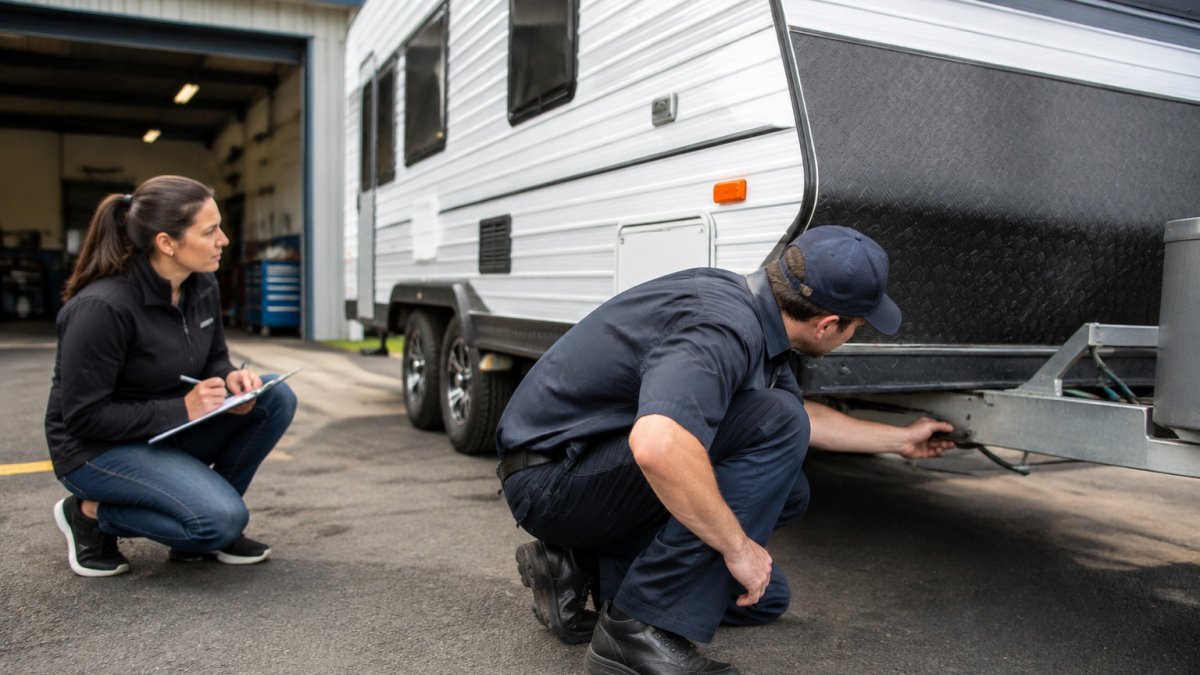
Last Updated: November 19, 2026
Quick Summary
To prepare a caravan for a roadworthy inspection, start your checks a fortnight before booking and work through lights, tyres, brakes, coupling, chains and rust, then book any licensed repairs and a gas compliance check early. Knowing how to prepare a caravan for a roadworthy inspection means fixing defects before the day, not polishing the van and hoping it passes.
- Start your checks a fortnight before the booking so there is time to order parts and book repairs.
- Test tail, stop, clearance, indicator and number plate lights with a helper or wall reflection.
- Brake performance, structural integrity and gas compliance need licensed technicians, not owner checks.
- Book a licensed gas fitter for the same week if the van has a gas bottle, cooker, fridge or heater.
- Ask for a written quote confirming what the fee includes and whether a retest is charged.
Table of Contents
- What a Caravan Roadworthy Inspection Checks
- Your Caravan Roadworthy Checklist, Step by Step
- Common Caravan Roadworthy Defects and How to Fix Them
- Caravan Gas Certificate Requirements Before You Book
- How Much Does a Caravan Roadworthy Cost?
- Inspection Day: Documents, Access and Setup
- Book Your Caravan Safety Inspection
- Frequently Asked Questions
What a Caravan Roadworthy Inspection Checks
A caravan roadworthy inspection is a safety check that confirms your van meets the standards to stay registered and towed legally. Knowing how to prepare a caravan for a roadworthy inspection saves you time, money and a failed first attempt.
The inspector is not looking for a showroom finish. Safety inspection failure usually comes down to lights, tyres, brakes and windscreens, and knowing the most common faults helps you check them before you book. They are looking for anything that could cause a crash, a breakaway or a fire. That means faults get caught at the component level, not the cosmetic level.
Owner Checks Versus Professional Testing
You can check plenty yourself. Lights, tyre tread, chains and reflectors are all within reach of a basic toolkit and a torch.
What you cannot do is certify the van. Brake performance, structural integrity and gas compliance need proper test equipment and a licensed eye. A common mistake is assuming a clean-looking van will sail through. Rust behind a wheel arch or a dragging brake can fail you regardless of how the van presents.
Your Caravan Roadworthy Checklist, Step by Step
Work through this caravan roadworthy checklist in order, starting a fortnight before your booking. The sequence matters: you want to find faults while there is still time to book repairs, and you want the van clean and accessible on the day. Print this list and tick each item off.
Two weeks out, paperwork and bookings
- Confirm what inspection type your state or territory requires and which provider is authorised to issue it
- Locate the compliance plate, VIN and registration papers
- Book the inspection and, if the van has gas, book the gas compliance check with a licensed gas fitter for the same week
- Ask the provider what they need on the day: access underneath, tow vehicle present, empty water tanks
One week out, owner checks with a torch and basic toolkit
- Walk the full perimeter and note every cracked lens, missing reflector and damaged mudflap
- Test all lights with a helper or a wall reflection: tail, stop, clearance, indicators and number plate light
- Check tyre tread, pressure and sidewalls on the van and the tow vehicle, including the spare
- Inspect wheel nuts, studs and rims for damage, and spin each wheel to listen for rough bearings
- Test the handbrake and feel for brake drag after towing a short distance
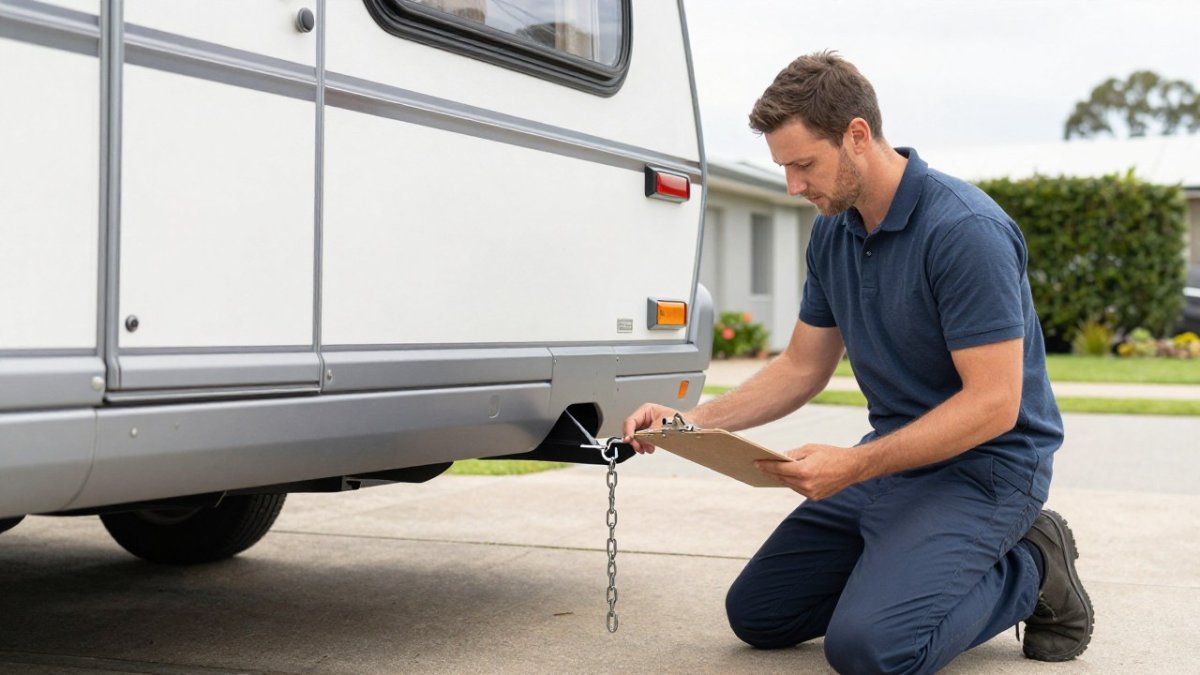
- Check the coupling, hitch, safety chains and breakaway system
- Confirm the compliance plate and number plate are legible and secure
- Look for rust behind wheel arches, under the drawbar and around the chassis rails
The day before, presentation and access
- Empty water tanks and secure loose items so the inspector can access brakes and coupling
- Clean the van enough that defects are visible, not hidden by mud or dust
- Charge or replace the breakaway battery if fitted, and confirm the breakaway switch operates
- Load the registration papers, previous certificates and photo ID
On the day, setup
- Arrive with the tow vehicle if the inspection covers towing setup
- Park where the inspector can walk around and under the van safely
- Hand over the paperwork and point out anything you have already repaired
Watch out: a van that looks clean can still fail on a dragging brake or rust behind a wheel arch, so do not skip the mechanical checks because the exterior presents well.
What Owners Can Check and What Needs a Licensed Technician
The line between owner checks and professional testing is where most preparation goes wrong. You can and should check lights, tyre tread and pressure, wheel nut torque, chain condition, reflector presence and number plate visibility. These are visual and tactile checks that need no test equipment.
What you cannot certify is brake performance, structural integrity, gas compliance and electrical safety. Brake testing needs a decelerometer or roller brake tester and a licensed eye. Gas systems need a licensed gas fitter with a manometer and leak-detection equipment. Structural rust needs assessment against the relevant standard, not a torch and an opinion. A common pattern is owners spending a weekend polishing the van while a dragging brake or an out-of-date gas bottle goes unnoticed.
If any owner check turns up a defect you cannot confidently fix, book the repair before the inspection rather than hoping it passes. Our trailer and caravan repairs team can handle the mechanical side, and our RWC and COI certificates cover the certification.
Common Caravan Roadworthy Defects and How to Fix Them
Most failures come down to a short list of repeat offenders. Here is what inspectors flag and how to deal with each one.
| Defect | Likely Fix | Impact if Ignored |
|---|---|---|
| Blown or cracked lights | Replace globe or lens | Instant fail |
| Worn or cracked tyres | Replace tyre | Fail, blowout risk |
| Loose or stripped wheel nuts | Re-torque or replace studs | Fail, wheel loss |
| Dragging or weak brakes | Adjust or repair brakes | Fail, unsafe towing |
| Worn coupling or chains | Replace component | Fail, breakaway risk |
| Corroded chassis or rims | Repair or replace | Fail, structural risk |
If your checks turn up defects, our trailer and caravan repairs team can fix them before the inspection. Watch out for rust hiding behind wheel arches and under the drawbar. It is easy to miss and hard to argue with an inspector.
Caravan Gas Certificate Requirements Before You Book
A caravan gas certificate is a separate requirement from the roadworthy check, and it catches plenty of owners out. If your van has a gas bottle, cooker, fridge or heater, the gas system needs a compliance check by a licensed gas fitter.
- Confirm the gas bottle is in date and secure
- Check the two-stage regulator and connections for leaks or damage
- Make sure gas appliances are operational and vented correctly
Book the gas check alongside your inspection so both are sorted in one visit. Our RWC and COI certificates cover the certification side. A failed gas check will hold up your registration even if everything else passes.
How Much Does a Caravan Roadworthy Cost?
There is no single national fee for a caravan roadworthy, because inspection charges are set by the provider and vary by state or territory, by van size and by the inspection type. The base inspection fee is only one line in the bill. Repairs, replacement parts and a separate gas compliance certificate add to the total, and a cheap inspection that finds ten faults is no bargain if the fixes cost more than a thorough check elsewhere.
Ask for a written quote up front and confirm three things: what the fee includes, whether a retest after repairs is charged, and whether the gas certificate is bundled or separate. A common pattern is providers quoting the inspection fee alone, then charging again for the retest once repairs are done. Get the retest policy in writing before you book.
What drives the total
- The base inspection fee, which varies by provider and jurisdiction
- Repairs and parts, which depend entirely on what the inspection uncovers
- A separate gas compliance certificate if the van has gas appliances
- A retest fee if the van fails and you return after repairs
- Travel or call-out charges if the inspector comes to you
Realistic preparation timeline
Allow a fortnight between starting your checks and your booking. That gives you time to order parts, book a licensed gas fitter and complete repairs without rushing. If the van fails, budget another week for repairs and the retest. Trying to compress the whole process into a few days is where owners get caught: a replacement coupling or a brake repair can take days to source, and a gas fitter may be booked out.
Retest and next steps
If the van fails, the inspector will list the defects. Fix them, keep the receipts, and book the retest. Some providers offer a reduced retest fee within a set window, so ask about that when you book the first inspection. Do not tow the van on public roads after a failed inspection unless the defect has been repaired or the provider has confirmed it is safe to move.
Watch out: a quote that looks low can hide a separate retest charge and a gas certificate fee, so compare the all-in cost rather than the headline inspection price.
Inspection Day: Documents, Access and Setup
The inspection itself is straightforward if you arrive prepared. Bring your registration papers, any previous certificates and photo ID.
- Make sure the van is empty enough for the inspector to access brakes and coupling
- Park where the inspector can walk around and under the van safely
- Have the tow vehicle present if the inspection covers towing setup
- Confirm the booking time and access details beforehand
If anything changes on the day, our contact page is the fastest way to reach us about access, timing or documents.
Book Your Caravan Safety Inspection
Getting your van inspection-ready is mostly about routine checks done early. Lights, tyres, brakes, coupling and gas are where most failures start, and all of them are fixable before inspection day.
At Northside Autocare, we provide certified testing for RWC and COI certificates. Our decades of mechanical experience and advanced diagnostic tools support thorough, reliable service. Don’t leave your booking to chance.
Book Your Service with Northside Autocare and tow with confidence.
Preparing a caravan for inspection does not have to be stressful. Start your checks early, fix what you find, and let a qualified team handle the certification. Get started with Northside Autocare and book a safety inspection that keeps your van legal and road-ready.
Frequently Asked Questions
What items are checked during a caravan roadworthy inspection?
An inspection covers the lights (tail, stop, clearance and indicators), reflectors and number plate visibility, tyres and tread, wheels, studs and nuts, brakes and handbrake operation, coupling, hitch and safety chains, plus identification and compliance plates. Gas systems are assessed separately under a gas certificate. Preparing each of these before you book reduces the chance of a fail and a repeat visit.
Do I need a gas certificate in addition to a roadworthy for my caravan?
Yes, in most cases. A roadworthy inspection focuses on the trailer’s running gear and lighting, while a gas certificate covers the gas bottle, two-stage regulator and gas appliances. These are separate documents, so check your state or territory regulator’s requirements and book a licensed gas fitter alongside your caravan roadworthy to avoid delays.
What are the most common caravan roadworthy defects?
The usual failures are faulty or missing lights, worn or under-inflated tyres, cracked or buckled rims, loose wheel nuts, a handbrake that does not hold, worn coupling components and corroded safety chains. Cracked reflectors and obscured number plates also come up. Most of these are cheap to fix if you check them early rather than on inspection day.
How much does a caravan roadworthy cost?
Pricing depends on the inspection provider, your location and whether any retests or repairs are needed, so ask for a quote before booking. Budget for the certificate itself plus any defect repairs and a possible gas certificate. Contact Northside Autocare directly for current pricing and a quote.


