

Last Updated: October 22, 2026
Quick Summary
A standard logbook service takes 2 to 4 hours of workshop time. A minor service at 10,000 to 15,000 km runs 1.5 to 2.5 hours, while a major service at 60,000 km or beyond stretches to 3.5 to 5 hours. Complex jobs can reach 5 to 6 hours.
- Add 30 to 60 minutes to your booking if you drop off during a busy morning.
- A 3-hour booking typically includes a 15-20 minute road test before handover.
- Tell the workshop about any symptoms when booking so diagnosis time is included.
- Manufacturers can require servicing to their specification but cannot force a dealership.
- Ask what is due at your kilometre interval to know if it is minor or major.
Table of Contents
- How Long Does a Logbook Service Take?
- What Is Included in a Logbook Service?
- Your Logbook Service Checklist: What Gets Inspected and Replaced
- A Step-by-Step Timeline of the Appointment
- What Can Make a Logbook Service Take Longer?
- Logbook Servicing and Warranty: Why the Schedule Matters
- How to Confirm the Expected Completion Time Before You Book
- Frequently Asked Questions
How Long Does a Logbook Service Take?
A standard logbook service takes 2 to 4 hours of workshop time, according to AutoGuru’s 2025 servicing guide. That figure comes from the research behind this guide from Northside Autocare, and it’s the number most drivers want before they hand over the keys.
But the honest answer is that a logbook service duration depends on your car and what’s due.
A minor service at 10,000 to 15,000 km runs 1.5 to 2.5 hours, per Car One’s 2025 workshop data. A major service at 60,000 km or beyond stretches to 3.5 to 5 hours. Complex jobs can reach 5 to 6 hours.
That’s the range. Below, we break down what actually drives it, so you can plan your day instead of losing it.
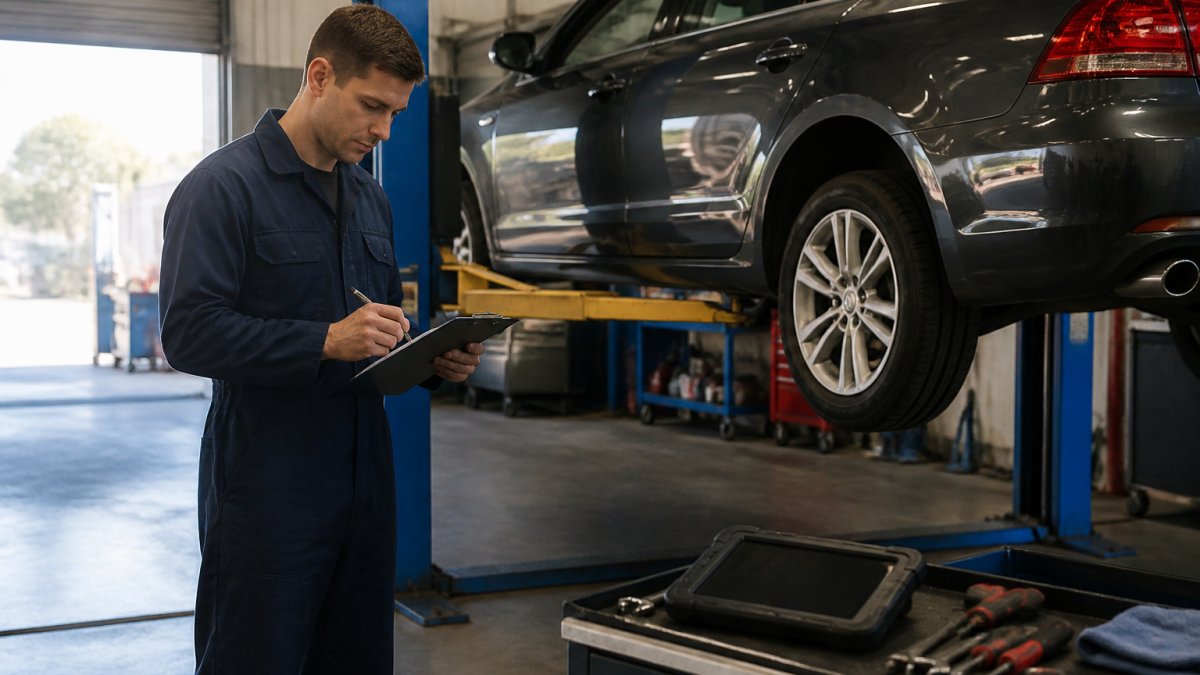
Typical Logbook Service Duration by Service Type
Here’s the planning table we’d give any customer who asks how long a logbook service takes:
| Service Type | Typical Duration | What Drives It |
|---|---|---|
| Minor (10,000-15,000 km) | 1.5-2.5 hours | Oil, filters, basic checks |
| Standard logbook | 2-4 hours | Full manufacturer checklist |
| Major (60,000 km+) | 3.5-5 hours | Plugs, fluids, deep inspection |
| Complex or extended | 5-6 hours | Multiple systems, older vehicles |
Use the middle column as your booking guide. Add 30 to 60 minutes if you’re dropping off during a busy morning.
What Is Included in a Logbook Service?
A logbook service is a scheduled maintenance visit performed exactly to your manufacturer’s service schedule, using the tasks and intervals set out in your owner’s manual. It is not a generic oil change with a stamp.
The service logbook itself is the record. Each entry proves the work was done at the right kilometre or time interval.
What’s included varies by make and model, but most schedules cover:
- Engine oil and oil filter replacement
- Brake, steering and suspension inspections
- Fluid level checks and top-ups
- Tyre condition and pressure checks
- Battery and charging system test
- Diagnostic scan for fault codes
Manufacturer recommendations drive the list, not the workshop’s own preferences. That’s the whole point.
Ask for the manufacturer’s checklist for your specific model before booking. A workshop that can produce it on request is following the schedule properly. One that can’t is guessing.
Your Logbook Service Checklist: What Gets Inspected and Replaced
Think of the logbook service checklist as two lists: things that get replaced, and things that get inspected.
Replaced items usually include engine oil, the oil filter, and at scheduled intervals the air filter, cabin filter, spark plugs and brake fluid. Inspected items cover brakes, belts, hoses, suspension, tyres, lights and fluid levels.
The split matters for your quote. Replaced parts carry a cost; inspections carry labour time.
A common mistake is assuming every logbook service includes everything. It doesn’t. A 15,000 km service and a 90,000 km service are different jobs with different checklists.
A Step-by-Step Timeline of the Appointment
Most guides skip this part. Here’s what actually happens during a 3-hour booking at a workshop:
- Check-in and keys (10 min): Confirm the schedule, note any concerns you’ve raised.
- Initial inspection (20 min): Vehicle on the hoist, visual check, fault code scan.
- Drain and replace (45-60 min): Oil, filters and scheduled replacement parts.
- Detailed checks (45-60 min): Brakes, suspension, belts, fluids, tyres.
- Road test (15-20 min): Confirm the vehicle runs and drives correctly.
- Report and handover (10-15 min): Walk through findings and stamp the logbook.
That adds up to roughly 2.5 to 3.5 hours for a standard service. A major service adds time at step 3 and step 4.
What Can Make a Logbook Service Take Longer?
The biggest delay driver is discovery. A technician finds a worn component mid-service, and the job stops while it’s priced and approved. That pause is not the repair itself, it is the time between the finding, the quote, your approval, and the parts being sourced. On a busy day, that can add an hour before any extra work begins.
Other common causes, and how each one actually extends the visit:
- Seized or rounded bolts on older vehicles. A sump plug, brake caliper bolt or suspension fastener that will not release cleanly turns a five-minute task into a thirty-minute extraction. Older vehicles with corrosion or previous poor repairs are the usual candidates.
- Parts not in stock and needing an order. A workshop that keeps common filters and fluids on the shelf can complete a standard service without leaving the building. A specialist part, a particular spark plug, a cabin filter for an uncommon model, a sensor, may need to be ordered from a supplier, which can push the job to the next day rather than the next hour.
- Heavily modified vehicles, including lifted 4WDs with custom suspension. Modified suspension, aftermarket skid plates and non-standard wheel setups change access to components and can require different torque settings or additional inspection steps. The manufacturer checklist assumes a standard vehicle.
- Additional repairs you approve on the day. Every approved extra task adds labour time to the original booking. A brake pad replacement, a coolant flush or a serpentine belt change is not a five-minute add-on.
- Peak booking periods with a full workshop queue. A workshop with every hoist occupied will still check your car in on time, but the gap between check-in and the start of work can stretch. Morning drop-offs during school holidays, end-of-month fleet servicing and the week before a long weekend are common peak periods.
- Diagnostic work on intermittent faults. If you have reported a warning light, a noise or a vibration, the technician may need to scan, road test and re-scan to reproduce the fault. Intermittent faults are the hardest to time-box.
Ultra Tune’s 2025 servicing guidance notes that actual time depends heavily on make, model and the complexity of tasks at that kilometre interval. We’d add one thing: a workshop that tells you upfront about possible delays is usually the one that finishes on time.
Approving extra repairs without a written quote is the fastest way to turn a 3-hour service into an all-day bill. Always ask for the price and the reason before you say yes.
You can reduce the risk of a long visit before you arrive. Tell the workshop about any symptoms when you book, a warning light, a noise, a fluid leak, a recent incident, so the booking includes time for diagnosis rather than discovering it mid-service. Confirm whether the parts for your scheduled interval are in stock. And ask what the workshop’s cut-off time is for same-day collection, so you know the realistic latest finish.
Logbook Servicing and Warranty: Why the Schedule Matters
Logbook servicing and warranty are directly linked. Miss a scheduled service, or use the wrong parts and fluids, and a manufacturer can decline a warranty claim on a related component.
The protection comes from following the manufacturer service schedule at the correct intervals, using a qualified workshop, and keeping the service logbook stamped.
Under Australian Consumer Law, manufacturers can’t force you to use a dealership to keep your warranty. They can require the service be done to their specification. That’s the distinction most drivers miss.
Your warranty protection comes from the schedule being followed and recorded, not from where the car was serviced. Keep the logbook stamped and keep your invoices.
How to Confirm the Expected Completion Time Before You Book
You can get a straight answer before the day. Ask three questions when you book:
- “What’s due at my kilometre interval?” The answer tells you minor or major.
- “How long do you expect it to take?” A good workshop gives a range, not a vague “sometime today.”
- “Will you call me before doing any extra work?” Get this confirmed upfront.
At Northside Autocare, we quote an expected window when you book and call before any additional work begins. Decades of mechanical experience and advanced diagnostic tools contribute to fewer surprises mid-service, though no workshop can promise zero.
Drivers who need their car back the same day: book a morning slot and ask for a minor-versus-major assessment when you book.
Can you wait on site? For a minor service, often yes. For a major service, plan alternative transport. Ask when you book rather than assuming.
A logbook service shouldn’t leave you guessing about your day. The real challenge is finding a workshop that gives you a clear time window, explains what’s due, and calls before any extra work. Northside Autocare provides manufacturer-approved logbook servicing backed by decades of mechanical experience and advanced diagnostic tools, plus safety and RWC/COI certification for cars, trucks, caravans and 4WDs. Book your service with Northside Autocare and get a straight answer on timing before you hand over the keys.
Frequently Asked Questions
How long does a logbook service usually take?
Most logbook services run between 2 and 4 hours of workshop time. A minor interval service at 10,000 to 15,000 km typically takes 1.5 to 2.5 hours, while a major service at 60,000 km or above can take 3.5 to 5 hours because it includes spark plug replacement and fluid flushes. Complex vehicles can stretch to 5 or 6 hours. The exact logbook service duration depends on your make and model and what the manufacturer schedule calls for at that interval.
What can make a logbook service take longer?
Extra maintenance tasks beyond the scheduled list are the main cause. If the inspection turns up worn brake pads, a leaking seal or a failing component, the workshop needs your approval and extra time to fix it. Seized or rusted fasteners, parts that need ordering in, and heavily modified vehicles such as 4WDs with custom suspension also add hours. Booking during a busy period can add waiting time too, so ask for a realistic window when you drop the car off.
Does a logbook service take longer than a normal car service?
Often yes. A normal car service follows a generic checklist, while a logbook service works through the manufacturer service schedule for your specific make and model. That means more inspection points and more replacement items at major intervals. A basic minor service can be quicker than a full logbook job, but the difference at major intervals is significant, which is why logbook bookings are usually quoted at 3.5 to 5 hours rather than a flat couple of hours.
Can I wait at the workshop while my car is being serviced?
For a minor service of 1.5 to 2.5 hours, waiting is realistic if the workshop has a customer area. For a major service of 3.5 hours or more, plan alternative transport instead. Ask when you book whether a courtesy vehicle, local drop-off or loan car is available. Also confirm the expected completion time in writing, and ask the workshop to call you before starting any extra work so you are not surprised by a longer stay or a bigger bill.
